Looking for the best 10-inch radial arm saw blades can be straightforward when you match blade design to your project goals. This guide highlights five top choices that cover finish work, framing, and general-purpose cutting. Each blade is chosen for clean edges, durability, and suitability for radial arm and sliding miter saw tasks. Ideal buyers range from professional carpenters needing smooth finishes to DIY enthusiasts tackling framing and fine trim work.
Summary table of selected products:
| Product | Best For | Key Feature |
|---|---|---|
| Oshlun SBW-100060N | Professional finish work | Negative hook, ATB carbide, thin kerf |
| Diablo Fine Finish Saw Blade | Ultra-smooth finishes | Hi-ATB teeth, thin kerf |
| WEN BL1060 | General finishing and precise crosscuts | Ultra-thin kerf, 60T |
| Freud LU83R010 | Heavy-duty combination cuts | TiCo carbide, non-stick coating |
| TOYAKI 120-Tooth | Fine finish for delicate trim | 120 tooth count, smooth operation |
Oshlun SBW-100060N 10-Inch Finishing Saw Blade
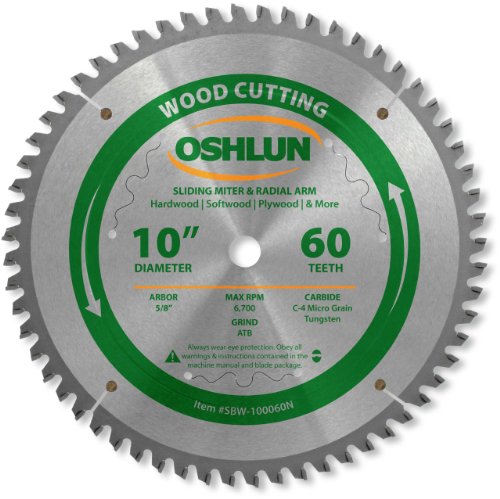
Best for: finishing work on fine trim, cabinetry, and projects where edge quality matters. This blade features a negative hook angle and thin kerf for precise control and fast, clean cuts. The ATB (Alternate Top Beveled) carbide tips provide wear resistance suitable for frequent crosscuts and miter operations common with radial arm saws.
Why it’s selected: The negative hook helps reduce pull and chatter, improving accuracy on small workpieces. Thin kerf minimizes waste and requires less cutting power, which can be advantageous on older saws or when working with delicate hardwoods.
Limitations: May not be the best choice for aggressive ripping where maximum removal rate is needed. Ensure your saw’s arbor and speed are compatible with 5/8″ blades for safe operation.
10″ Fine Finish Sliding Saw Blade, Negative(-5°) 80T

Best for: finer finish cuts on cabinetry, trim, and plywood subfloors where edge quality is critical. The -5° negative hook angle helps control the cut, reducing tear-out and chipping on end grain surfaces. An 80-tooth count supports smoother edges on even hardwoods.
Why it’s selected: The combination of negative hook and 80T teeth yields smoother finishes with less chipping, particularly on crosscuts through thin or fragile stock. Kerf is thin enough to reduce waste while maintaining rigidity for radial arm setups.
Limitations: May cut slower than higher-rake blades on softwoods; avoid heavy ripping with this blade where fewer teeth per inch could affect cut rate.
Diablo Fine Finish, 60 Hi-ATB Teeth, 10″ Diameter

Best for: heavy-duty fine finish projects with hard or soft woods where edge quality and durability are required. The Hi-ATB geometry enhances chip-free finishes and efficient material removal.
Why it’s selected: Diablos’ TiCo carbide tips and anti-vibration design contribute to consistent cuts with reduced dwell time between passes. It is suited for repetitive crosscuts on miter and radial arm saws where precision matters.
Limitations: Slightly higher price point and anti-stick coating can wear over long-term use; monitor wear on the carbide tips for best results.
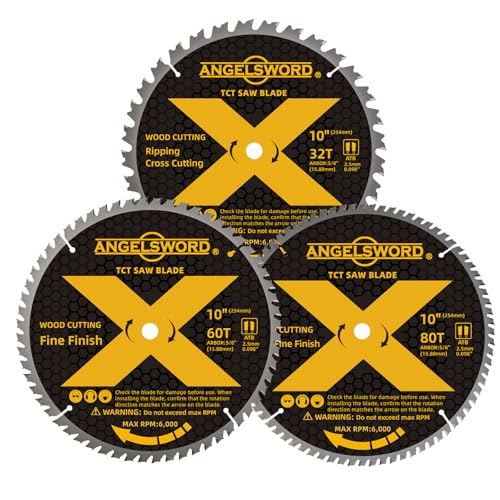
Ryltanks 10 Inch Combo Pack: 32T/60T/80T

Best for: versatile saw work with one package covering rough framing, standard ripping/crosscutting, and fine finishing. The pack includes 32T for framing, 60T for general cuts, and 80T for smoother finishes.
Why it’s selected: The 3-pack format offers flexibility for mixed jobs without changing blades frequently. The 5/8″ arbor is standard for many radial arm and miter saws, and the ultrathin kerf supports reduced cutting resistance.
Limitations: The 32T blade is less suited for fine finish work; ensure you pair the right tooth count with the material and cut type.
WEN BL1060 10-Inch 60-Tooth Fine-Finish Blade
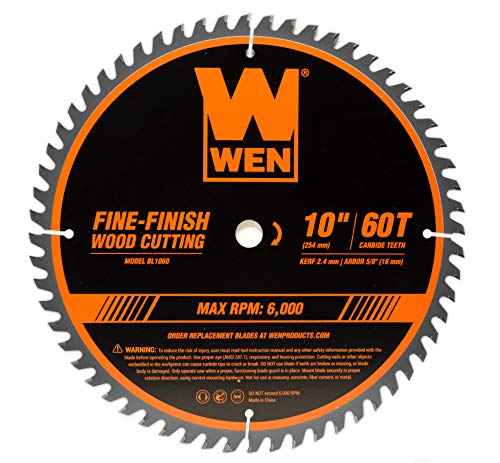
Best for: fine finish work on miter and table saws with a 5/8″ arbor. The ultra-thin kerf helps reduce power draw and provides cleaner cuts in woodworking projects requiring precise edges.
Why it’s selected: Its 60T count delivers a balance between material removal and edge quality. The blade is designed for consistent performance across hard and soft woods, making it a reliable general-purpose option for finish work.
Limitations: For very thick stock or heavy ripping, a blade with fewer teeth may remove material faster but with rougher edges; plan your cut type accordingly.
ANGELSWORD 120-Tooth Fine Finish Blade
Best for: ultra-fine finish work, precise trim, and delicate finishes on wood projects. A high tooth count allows for very smooth edges and minimal tear-out on thin materials.
Why it’s selected: Tungsten carbide teeth provide wear resistance and long life under routine finish-work conditions. The 5/8″ arbor fits standard radial arm setups, and the 120-tooth configuration excels in cleanup passes and panel work.
Limitations: Not ideal for aggressive ripping or rough stock removal; choose a lower tooth count blade for fast material removal when needed.
Buying Guide: Key Purchase Considerations For 10-Inch Saw Blades
- Tooth count and finish goal: Higher tooth counts (60T–120T) are better for fine finishing, while lower tooth counts (32T–60T) excel at framing and fast cuts. For a radial arm saw, balance edge quality with cutting speed.
- Kerf width: Thin kerf blades reduce resistance and power needs, improving cut speed and reducing wobble. Expect slightly more blade wobble on very soft stock with ultra-thin kerfs.
- Hook angle: Negative hook angles improve control on crosscuts and reduce tear-out on end grains. Positive hooks cut faster but can cause pulling or chipping if not used carefully.
- Material compatibility: Carbide-tipped blades provide better wear resistance for hardwoods and plywood; consider coatings and anti-vibration features for demanding jobs.
- Arbor size: Ensure 5/8″ arbor compatibility with your saw. Some blades include adapters, but verify arbor compatibility before purchase.
- Application kind: Use dedicated finish blades for cabinetry and trim, and use more generalized blades for framing and rough cuts. Mixing blade types can simplify workflow and improve results.
Frequently Asked Questions
- What blade is best for fine finish on a radial arm saw? A blade with a high tooth count (60T–120T) and a negative hook angle often yields the cleanest edges with minimal tear-out.
- Can I use a 10-inch blade with a 5/8-inch arbor on any radial arm saw? Most 10-inch blades with a 5/8″ arbor are compatible with many radial arm saws, but always confirm arbor type and saw speed rating before use.
- Is a thin kerf blade better for all projects? Thin kerf blades reduce cutting resistance and waste, but they can be less rigid and require precise alignment for consistent results on dense materials.
- Should I choose a Hi-ATB or ATB tooth design for finish work? Hi-ATB and ATB designs both yield smooth edges; Hi-ATB is especially effective on crosscuts in hardwoods with improved edge quality.
- Is it worth buying a 3-pack blade set? A multi-pack offers versatility for different tasks (framing, finish, and ultra-finish), saving time on blade swaps during large projects.
- How does negative hook angle affect cutting? Negative hook angles help stabilize the blade in crosscuts, reducing the tendency to pull material toward the blade and improving control.