Best 12 Volt Solar Panel for Deer Feeder: Efficient Off-Grid Power on the Go
Choosing the right 12V solar panel for a deer feeder means balancing durability, charging speed, weather resistance, and easy installation. The options below cover a range of features—from rugged mounting hardware to corrosion-resistant cables—so you can keep feeders running consistently in varying conditions. This guide highlights five top picks and a buying guide to help you compare performance, compatibility, and longevity for outdoor setups.
Summary Table: Selected Products
| Product | Brand | Key Feature | Power | Water/Weather Rating |
|---|---|---|---|---|
| SOLPERK 12V Solar Panel Battery Charger | SOLPERK | Fast charging with single-crystal silicon | 1.7W | Waterproof, weather-ready |
| Highwild 12-Volt Solar Panel Charger | Highwild | Durable mounting and 45-degree tilt | 12V Panel | Weather-tolerant |
| POWOXI 12V 1.7W Solar Panel (12V) | POWOXI | Fast charging with monocrystalline cells | 1.7W | Weatherproof, durable |
| VOLT HERO 12V Solar Panel Charger | VOLT HERO | Wide compatibility with multiple battery interfaces | 1.98W | IP65 waterproof, corrosion-resistant |
| Boss Buck 12V Solar Panel Charger | Boss Buck | Pre-assembled, includes mounting bracket and wire guard | 12V Panel | Weather-ready |
SOLPERK 12V Solar Panel Battery Charger

The SOLPERK solar panel uses single-crystal silicon to deliver efficient charging. A clear PC plastic cover helps maximize sunlight absorption, while an integrated diode prevents reverse current. It ships with a mounting bracket and weatherproof components, making it well-suited for outdoor deer feeders. The included wire is stainless steel-wrapped to resist animal interference, contributing to long-term reliability. Pre-drilled frame holes and simple battery clipping enable straightforward setup.
Highwild 12-Volt Solar Panel Charger

The Highwild solar panel is designed for outdoor reliability, capable of withstanding rain, wind, and temperature extremes. It features a polycarbonate front cover for high light transmission and a sturdy aluminum mounting bracket set at a 45-degree tilt for optimal sun exposure. Its energy-saving 12V output makes it a solid option for deer feeders needing consistent power without frequent maintenance.
POWOXI 12V 1.7W Solar Panel

The POWOXI 12V solar charger uses a high-efficiency monocrystalline panel and a 95% light-transmitting polycarbonate cover for fast charging. It is lightweight yet durable, designed to withstand outdoor conditions, and includes a stainless steel flex-conduit to protect cables from bending and wear. This setup accommodates easy outdoor mounting and reliable operation across seasons.
VOLT HERO 12V Solar Panel Charger
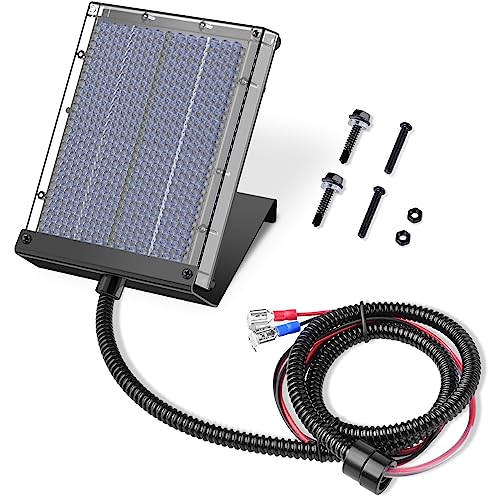
VOLT HERO offers a 12V charger built with a polycrystalline cell and robust mounting options. It includes piggyback connections and multiple interfaces for direct battery charging, simplifying compatibility with a range of feeder batteries and gear. The IP65-rated waterproof design, plus high-temperature and corrosion resistance, makes it suitable for demanding outdoor use.
Boss Buck 12V Solar Panel Charger

Boss Buck’s 12V solar panel is pre-assembled for quick deployment and includes a mounting bracket and wire guard. Built to resist weather and animal interference, this option emphasizes durability and ease of use for preparing a deer feeder’s solar charging system without complex setup. It is designed to deliver steady power in varied outdoor conditions, making it a practical choice for field use.
Buying Guide: Key Purchase Considerations
When selecting a 12V solar panel for deer feeders, consider the following factors to balance performance with reliability:
- Power output and charging speed: Higher wattage generally translates to faster charging, especially in winter or shaded conditions. Match panel wattage to feeder battery capacity and expected sun exposure.
- Durability and weather resistance: Look for IP ratings, polycarbonate covers, and rust-proof mounting hardware. Materials like stainless steel wiring and aluminum brackets increase longevity in harsh climates.
- Mounting options and orientation: A tilt angle around 30–45 degrees often captures more sunlight through varying seasons. Ensure a mounting bracket is included or readily adaptable to your feeder’s mounting system.
- Cable management and conduit: Protective conduits reduce cable wear from weather, wildlife, or ground movement. Durable wire guards can prevent damage from gnawing or debris.
- Connector compatibility: Check that the panel’s connectors match your feeder battery terminals or desired charging interface. Some models offer multiple interfaces for flexible use.
- Ease of installation: Pre-drilled frames, included screws, and simple clipping to batteries reduce setup time and maintenance
- Maintenance and service life: Aluminum, rugged plastic housings, and quality diodes improve long-term performance and prevent reverse charging.
Perspectives to consider include value for money, specialized features like anti-theft or vandal-resistant components, and availability of replacement parts or accessories. For feeders in extreme environments, prioritize weatherproof design and robust cable protection. If you rotate feeders seasonally or move them across locations, modular or universally compatible panels may offer the best return on investment.