Answering the question: choose a drywall sander with built-in dust collection to keep your worksite cleaner and healthier. This guide highlights five top options, each best suited for different types of buyers—from DIY homeowners tackling small projects to professionals aiming for fast, low-dust finishing. The selections emphasize strong suction, adjustable speeds, and extendable reach. A quick buyer table follows to help you compare core features at a glance.
| Product | Best For | Key Benefit |
|---|---|---|
| Hyde Tools 09165 | Budget-conscious DIYers | Attachs to any wet/dry vacuum for dust-free sanding |
| Protmex 1000W | Versatile home projects | High suction with 6 speeds and extendable reach |
| IMQUALI 2026 Upgraded | Pro-level DIY to light renovations | Auto dust vacuum system with 7 speeds and telescopic handle |
| SKIL SR211601 | Compact, easy-to-use option | Cyclonic dust box and variable speed |
| VEVOR 800W | Balanced performance with durability | Automatic dust removal and LED lights |
Hyde Tools 09165 Dust-Free Drywall Vacuum Hand Sander

The Hyde 09165 is a hand sander designed to connect with a wet/dry vacuum for dust-free drywall finishing. It protects furniture, floors, electronics, and lungs from drywall dust. The EasyClamp system streamlines sanding screen replacement. Best for small patches or touch-ups where portability matters and you want minimal cleanup. A limitation is that it relies on an external vacuum, which could complicate setups in tight spaces.
Drywall Sander, 1000W Popcorn Ceiling Removal Tool
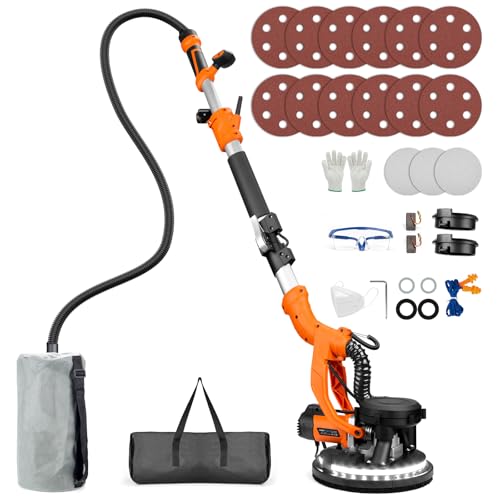
This Protmex model offers a 1000W copper motor with 6 variable speeds (800–2200 RPM) and a built-in vacuum. It’s well-suited for sanding drywall, painted surfaces, ceilings, and plaster. The vacuum system improves dust collection to a high level, and its retractable pole extends 4.9–6.2 feet for reaching high areas. Use this if you need strong suction and flexible height without a ladder. A potential caution is that the model’s advanced features require proper setup to maximize dust collection.
IMQUALI Drywall Sander, 2026 Upgraded 8-Amp

The IMQUALI 2026 Upgraded sander uses an 8-amp copper motor with seven variable speeds (800–1800 RPM). It features an auto dust vacuum system with a 10-hole sanding disc design that claims up to 99% dust capture when used correctly. The telescope design and light weight (about 8.6 pounds, with attachments) support easy maneuverability. Choose this if you want high dust control and extended reach for ceilings. Limitation: slight static electricity may occur in very dry conditions, which is normal.
SKIL 5” Random Orbital Sander with Cyclonic Dust Box

The SKIL SR211601 features a 2.8-amp motor with 13,000 orbits per minute and a cyclonic, easy-to-empty dust container. Variable speed control allows tailored power for different materials. It’s ideal for quick, lower-dust smoothing on smaller projects. Better for users who value a simple, compact sander with straightforward maintenance. A potential drawback is that it may have less raw suction than larger, vac-equipped models.
VEVOR Drywall Sander With Dust Collection

The VEVOR model offers an 800W motor with adjustable speeds from 1200–2300 RPM and an automatic vacuum dust collection system. It includes LED lights and a dust bag, with attachments designed to reduce dust during sanding. Best for users seeking a balance of power, dust control, and visibility in dim workspaces. Limitation: some setups may require adapter compatibility with your vacuum system.
Buying Guide: Drywall Sander With Dust Collection
What should I look for in a dust-collection drywall sander?
Key factors include motor power (watts or amps), adjustable speed range, dust collection efficiency, and compatibility with standard vacuums. Look for models advertising high dust capture percentages and multi-hole discs for better suction.
Is an extendable handle essential?
Extendable or telescoping handles help reach ceilings and high walls without ladders. If you work on tall spaces, prioritize models with a robust extension range and lightweight design to reduce fatigue.
What about quick accessory changes?
Some sanders use EasyClamp systems or integrated twist-release mechanisms for fast sanding screen replacement. This reduces downtime between prep and finishing passes and keeps dust down.
Should I choose corded or cordless?
Corded units generally offer consistent power for longer sessions, while cordless models provide more mobility. For large drywall projects, a corded sander with a reliable vacuum is often preferred.
How important is static electricity and dust leakage control?
Dry conditions can cause static, and some models specify higher dust-sealing ports to prevent leakage. If you work in dry environments, choose a unit with well-sealed discs and a strong vacuum system.
What are common pros and cons across these models?
- Pro: Strong dust collection and high suction improve cleanliness and air quality.
- Con: Higher-end models may require more setup and maintenance of the vacuum system.
- Pro: Extendable handles provide better reach for ceilings and tall walls.
- Con: Some compact models have smaller pads and slower sanding for large areas.
Frequently Asked Questions
- What is the best drywall sander for dust control?
Models advertising automatic dust collection and high suction efficiency generally offer the best dust control. - Can I use any vacuum with these sanders?
Most are designed to work with standard wet/dry vacuums; check the port size and included adapters. - Do these sanders work on popcorn ceilings?
Yes, several models are marketed for popcorn ceiling removal with dust collection features. - Is a variable speed setting important?
Yes, it helps adapt to different surfaces and coatings for a smoother finish. - Are lighter sanders better for ceilings?
Lightweight and extended reach helps, but ensure enough power and dust control for effective sanding.