Choosing the right float switch for a water tank or sump system is essential for preventing overfill and ensuring steady operation of pumps. This guide highlights five dependable options, detailing their features, compatibility, and installation considerations. Each product below is suited for American residential or light commercial use and aims to deliver precise level sensing, durability, and straightforward wiring.
| Product | Brand | Key Features |
|---|---|---|
| Baomain 4M 13ft Cable Float Switch | Baomain | Dual-Mode Level Control, 8A/250V, 0-60°C, waterproof cable |
| Parts2O FPW217-180B Tank Float Switch | Parts2O | Piggyback plug, normally-closed contacts |
| Nxtop 4M Cable Float Switch | Nxtop | AC 8A/250V or 4A/380V, 50,000-cycle endurance |
| SJE Rhombus Float Switch | SJE Rhombus | SPDT, wide angle, PVC housing, adjustable on/off points |
| uxcell PP Float Switch | uxcell | M10 thread, 115mm length, magnet reed sensing |
Baomain 4M Float Switch For Tanks
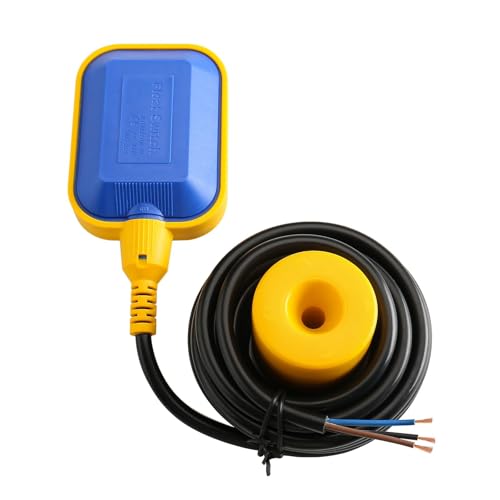
Baomain’s float switch offers dual-mode level control suitable for both filling and draining. It features NO/NC wiring options for versatile control, achieving 0.2m accuracy in tanks, pools, or sewage systems. Industrial-grade performance supports loads up to 8A at 250V or 4A at 380V and endures over 50,000 cycles. A counterweight aids precise calibration, and the 13-foot waterproof cable enables deep-tank installations, making it a solid all-around choice for reliable water level sensing.
Parts2O FPW217-180B Tank Float Switch

Parts2O’s FPW217-180B is designed for tank and aerator applications, featuring a piggyback plug for troubleshooting and manual operation, with normally-closed contacts. It provides a straightforward install for pumps and tanks where a simple, dependable on/off signal is required. This model is suitable for users seeking quick testing and easy replacement in standard water systems.
Nxtop 4M Cable Float Switch

Nxtop’s water level controller is engineered for tank and sump applications with flexibility in voltage and current (AC 10A at 250V, 4A at 380V). It offers a 0.2m control range and up to 50,000 electrical endurances, with NO+NC contacts for wide-use scenarios. The unit is specified for temperatures from 0°C to 60°C, making it suitable for typical indoor tanks and basins where reliable automatic control is essential.
SJE Rhombus Float Switch, SPDT

SJE Rhombus offers a rugged, American-made SPDT float switch with a wide-angle design and PVC housing. The device provides 13A at 120–230V and supports adjustable on/off points with a 15-foot cord length. It is CSA compliant and built to perform in potable water environments with solid durability and long-term repeatability, ideal for larger tanks and systems requiring precise level control.
uxcell PP Float Switch For Water Pump

uxcell’s PP float switch uses a magnetic reed mechanism within a polypropylene housing. The M10 thread and 115mm length make it compatible with compact tanks and pump connections. It is rated for up to 110V DC/0.5A switching and includes a compact design suitable for basic level sensing in smaller tanks or secondary reservoirs, offering a simple, low-cost option for basic automation tasks.
Floating considerations: buying guide
Key purchase considerations include compatibility with your pump and wiring, environmental resistance, and the required voltage/current rating. For residential tanks, select switches rated for at least 10–13A at 120V or higher if you anticipate larger pumps. Waterproof or IP-rated housings extend life in wet or submerged installations. Consider switch type: NO/NC or SPDT, based on whether you want simple on/off control or more complex logic. Cable length matters for deep tanks; longer leads reduce the need for additional conduit. Durability includes the switch’s material (PP, PVC) and temperature range to match your climate. For easy serviceability, piggyback plugs or modular designs can simplify maintenance.
Wiring and installation best practices:
- Mount the switch away from direct sunlight and corrosive exposures unless rated for such conditions.
- Use appropriate strain relief and secure wiring to prevent accidental pulls or damage.
- Test the system manually before relying on automatic control to verify correct on/off behavior.
- Label circuits clearly to avoid confusion during maintenance or repairs.
Durability versus cost is a common trade-off. Higher-end models (industrial-grade, SPDT, wider temperature ranges) offer greater reliability in demanding environments; however, for basic home tanks, affordable twin-contact options often suffice. Finally, ensure compatibility with your existing pump or controller and verify any required certifications for potable water use if applicable.