When looking for the best generator for home use, it’s important to consider power capacity, fuel options, runtime, and convenience features to ensure reliable backup power during outages or outdoor activities. Among numerous options, our selection highlights versatile generators offering gasoline, propane, or natural gas fueling with features like remote start, transfer switch readiness, and quiet operation. Here is a concise summary table of the top-rated generators ideal for different home use scenarios including backup power and portability.
| Product | Power Output (Running Watts) | Fuel Type | Runtime | Special Features |
|---|---|---|---|---|
| Westinghouse 14500 Peak Watt Tri-Fuel | 11,500W (Gasoline) | Gasoline, Propane, Natural Gas | Up to 19 hrs (Gasoline) | Remote start, Transfer switch ready, Built-in fuel gauge |
| Westinghouse 12500 Watt Dual Fuel | 9,500W (Gasoline) | Gasoline, Propane | Up to 12 hrs (Gasoline) | Remote start, Multiple outlets, VFT display |
| Westinghouse 6500 Watt Dual Fuel | 5,300W (Gasoline) | Gasoline, Propane | Up to 14.5 hrs (Gasoline) | CO sensor, Transfer switch ready, RV ready |
| ERAYAK 4500W Portable Inverter Generator | 3,500W (Gasoline) | Gasoline | Varies (Eco mode) | Super quiet, Clean power output, ECO mode |
| Westinghouse 13500 Peak Watt Dual Fuel | 10,500W (Gasoline) | Gasoline, Propane | Up to 19 hrs (Gasoline) | Remote start, CO and low oil shutdown, Digital meter |
Westinghouse 14500 Peak Watt Tri-Fuel Home Backup Generator

The Westinghouse 14500 Peak Watt Tri-Fuel Generator is designed for homeowners seeking a robust and versatile power source. Capable of producing 14,500 peak watts and 11,500 running watts on gasoline, this generator supports large homes and critical appliances during power outages. It can also run on propane or natural gas, offering flexibility for fuel availability.
With a massive 9.5-gallon fuel tank and a built-in fuel gauge, the generator can run up to 19 hours on gasoline or approximately 7 hours on a 20-pound propane tank. It features remote electric start for convenience and is transfer switch ready, allowing seamless connection to your home’s electrical system for emergency power supply. Its multi-fuel capability is excellent for adapting to various emergency scenarios.
Westinghouse 12500 Watt Dual Fuel Home Backup Generator

This Westinghouse dual fuel generator offers 9,500 running watts on gasoline and supports propane as a fuel option, providing flexible energy solutions for home use. It includes a remote start with key fob, making it easy to operate from a distance, and a robust 6.6-gallon fuel tank with a fuel gauge allowing up to 12 hours run time.
Equipped with multiple outlets including two GFCI household receptacles and RV-ready plugs, it suits various power needs around the home or campsite. Features like a digital VFT display monitor runtime, frequency, and voltage output, while automatic low oil shutdown protects the engine. Rugged construction and user safety features make it dependable for backup power.
Westinghouse 6500 Watt Dual Fuel Home Backup Generator
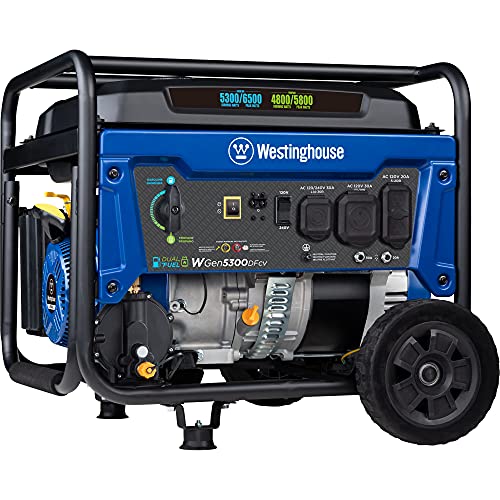
The Westinghouse 6500 Watt Dual Fuel generator is an efficient choice for smaller homes or partial backup needs. Providing 5300 running watts on gasoline and also supporting propane, it extends runtime up to 14.5 hours on a full 4.7-gallon fuel tank.
This model features a 120/240V volt selector switch to supply different power types and is both transfer and RV ready. Safety is enhanced with rubber-covered outlets and an integrated CO sensor for shutoff in hazardous conditions. It includes useful extras like a propane hose, oil funnel, tool kit, and wheel kit for easy mobility and use.
ERAYAK 4500W Portable Inverter Generator for Home Use

The ERAYAK 4500W Portable Inverter Generator offers clean, stable power output suitable for sensitive electronics like laptops and medical devices with 3500 running watts. Its inverter technology enhances safety and fuel efficiency while delivering consistent energy for home backup or camping.
Weighing just 55.12 lbs, it is very portable and features ultra-quiet operation at 60.5 dB(A), making it ideal for residential areas and outdoor use. The ECO mode adjusts engine speed for optimal fuel consumption and reduced noise, which is beneficial during prolonged use. Compact dimensions and the option for an accessory wheel kit improve mobility.
Westinghouse 13500 Peak Watt Dual Fuel Home Backup Generator

The Westinghouse 13500 Peak Watt Dual Fuel Generator delivers strong performance with 10,500 running watts on gasoline and propane fuel options. Its 9.5-gallon tank supports long backup duration of up to 19 hours, ideal for extended outages.
Equipped with advanced safety features like automatic low oil and carbon monoxide shutdowns, this generator ensures protection during use. The remote electric start and digital hour meter add convenience and maintenance awareness. Multiple household and RV-ready outlets make it a versatile power solution for large homes.
Buying Guide for Selecting the Best Home Generator
Power Output and Capacity
Evaluate your power needs by listing the essential appliances and devices you want to run during an outage. Generators are rated by running watts and peak watts; running watts indicate continuous power delivery, while peak watts handle startup surges from appliances like refrigerators or pumps. Choose a generator with slightly higher capacity than your total wattage load to ensure reliable performance without overloading.
Fuel Types and Availability
Generators commonly run on gasoline, propane, natural gas, or are dual/tri-fuel capable. Gasoline offers easy refueling but shorter storage life, while propane and natural gas provide cleaner, longer-lasting fuels with quieter operation. Tri-fuel models add versatility, allowing you to switch fuels based on availability or cost. Consider local fuel availability and storage when selecting your generator.
Runtime and Fuel Tank Size
Longer runtime keeps your home powered through extended outages without frequent refueling. Check the fuel tank capacity and estimated runtime at 50% or 25% load. Larger tanks provide more autonomy but increase weight and size. Generators with fuel gauges help monitor levels easily during operation.
Portability and Noise Levels
For occasional home use or camping, portability can be important. Models with wheel kits, handles, and lightweight designs improve transportability. Also, consider noise output, especially in residential neighborhoods; inverter generators tend to run quieter than traditional models.
Safety Features and Convenience
Modern generators include safety features such as automatic low oil shutoff, CO sensors, and circuit breakers to protect users and the engine. Features like remote electric start, transfer switch compatibility, multiple outlet types, and digital displays add to usability and integration with home electrical systems.
Transfer Switch Compatibility
If you want to connect the generator to your home’s electrical panel, a dedicated transfer switch is safer and easier to use. Generators labeled as “transfer switch ready” have appropriate outlets to plug into these panels, enabling smooth and code-compliant power transitions.
Clean Power Output for Electronics
Inverter generators produce clean, stable electricity with low total harmonic distortion, suitable for sensitive electronics such as computers, medical equipment, and HVAC systems. This is critical if you plan to power delicate devices directly.
By considering these factors, you can choose the best generator for home use tailored to your power requirements, budget, and lifestyle, ensuring reliable energy whenever you need it.