Finding the right generator with an electric start can make all the difference during power outages or outdoor activities. This guide covers the top portable generators that offer ease of use, power versatility, and safety features for American homes and recreational needs. Below is a summary table highlighting key specs of five highly rated models making your selection easier.
| Model | Running Watts | Fuel Type | Run Time | Special Features |
|---|---|---|---|---|
| Westinghouse 14500 Peak Tri-Fuel | Up to 11,500 (gasoline) | Gasoline, Propane, Natural Gas | Up to 19 hours (gasoline) | Remote start, transfer switch ready |
| WEN 5600-Watt Portable | 4,500 | Gasoline | Not specified | CO shutdown sensor, electric start |
| WEN Quiet 4800-Watt Dual Fuel | 4,000 (gasoline) | Gasoline, Propane | Not specified | Clean power, CO shutdown sensor |
| Westinghouse 6600 Watt Backup | 5,300 | Gasoline | Up to 14.5 hours | Remote start, CO sensor, transfer switch ready |
| WEN 11,000-Watt Dual Fuel | 8,300 (gasoline) | Gasoline, Propane | Not specified | Electric start, wheel kit, transfer switch ready |
Westinghouse 14500 Peak Watt Tri-Fuel Home Backup Portable Generator

The Westinghouse 14500 Peak Watt Tri-Fuel Generator is a robust choice for large homes requiring dependable backup power. It offers versatility by running on gasoline, propane, or natural gas, delivering up to 14,500 peak watts and 11,500 running watts on gasoline. The generator features a 9.5-gallon fuel tank with a built-in gauge, enabling up to 19 hours of continuous use. With a remote electric start and transfer switch compatibility, it simplifies operation. This tri-fuel capability allows you to select the most convenient fuel source available during emergencies.
WEN 5600-Watt Portable Generator with Electric Start

The WEN 5600-Watt Portable Generator is designed for reliable power delivery with 5,600 starting watts and 4,500 running watts. Its 224cc engine features an electric start for quick activation. Safety is enhanced by the WEN Watchdog CO Shutdown Sensor that turns the generator off if dangerous carbon monoxide levels are detected, making it suitable for home environments. It supports transfer switch and RV readiness, making it versatile for multiple uses.
WEN Quiet 4800-Watt Dual Fuel RV-Ready Inverter Generator

The WEN 4800-Watt Dual Fuel Inverter Generator stands out for clean power output, perfect for sensitive electronics like smartphones and laptops. It runs on gasoline or propane, producing up to 4,800 surge watts and 4,000 rated watts on gasoline. The electric start eases operation, and the built-in CO Watchdog ensures safety against carbon monoxide hazards. This model is RV-ready, making it a great option for outdoor use where quiet, reliable power is essential.
Westinghouse 6600 Watt Home Backup Generator with Remote Start

The Westinghouse 6600 Watt Generator provides 5,300 running watts with a 4.7-gallon fuel tank, offering up to 14.5 hours of runtime. It includes a remote push-button electric start with key fob control. Suitable for home backup, it comes equipped with multiple outlet options including household duplex and RV-ready receptacles, all protected by rubber covers. The generator also features a built-in CO sensor and transfer switch compatibility for safety and ease of integration.
WEN 11000-Watt Dual Fuel Portable Generator with Electric Start
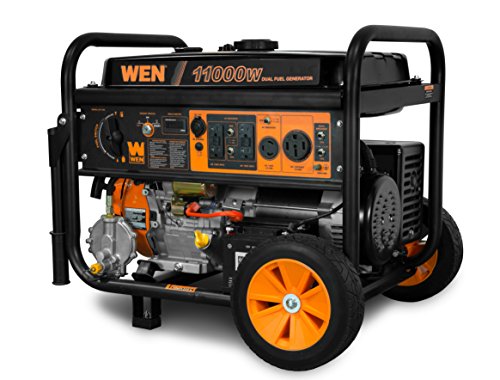
The WEN 11000-Watt Dual Fuel Generator is a powerhouse with an electric start key ignition and a 457cc engine. It delivers up to 11,000 surge watts and 8,300 running watts on gasoline, and slightly less on propane. Switching between fuel types is effortless via a selection dial. It’s equipped with a wheel kit for portability and handles both 120V and 240V outputs, ideal for home backup systems and transfer switches.
Buying Guide: Key Factors to Consider When Choosing a Generator With Electric Start
Power Output and Capacity
Running watts determine how many devices the generator can support simultaneously, while peak or surge watts indicate short bursts of higher power needed to start motors or appliances. Choose a generator whose running watts exceed your essential equipment’s combined wattage.
Fuel Type and Efficiency
Generators may run on gasoline, propane, natural gas, or dual/triple fuel. Tri-fuel models offer greater fuel flexibility, especially in emergencies or remote locations. Fuel tank size and consumption rates affect runtime, so consider larger tanks for longer use without refueling.
Ease of Use: Electric Start and Controls
An electric start system significantly simplifies operation compared to recoil-only models. Features like remote push-button start and digital hour meters offer added convenience. Look for models with clear control panels and easy-to-use fuel selectors.
Safety Features
Automatic carbon monoxide (CO) shutdown sensors are critical for preventing dangerous CO poisoning. Additional safety elements include automatic low oil shutdowns and outlet covers to prevent electrical hazards.
Portability and Noise Level
Consider generator weight and presence of wheel kits or handles to enhance portability. For residential or recreational use, quiet inverter generators are preferable since they produce less noise pollution.
Transfer Switch Compatibility
If connecting a generator to your home’s electrical system, ensure it is transfer switch ready. This enables safe and legal power integration without backfeeding hazards.