Best Ground Bar Options for Breaker Boxes: Reliable Choices for Safe Electrical Panels
Choosing the right ground bar or grounding solution for a breaker box is essential for safety and panel performance. This guide highlights five solid options and compares their key features, installation notes, and suitability for both indoor and outdoor setups. Each product below is designed to improve grounding reliability, conductor organization, and corrosion resistance in various panel configurations.
| Product | Brand | Key Use | Highlights |
|---|---|---|---|
| Leviton Circuit Breaker Ground Lug, 6-2/0 Awg | Leviton | Ground lug for load centers | High conductivity, corrosion resistance, supports large conductors |
| Square D PK9GTA Ground Bar | Schneider Electric | Ground bar for NQOD panels | Copper/Aluminum option, 9 terminals, compatible with QO/PK panels |
| Tugermoola Ground Bus Bar 8 Position | Tugermoola | Grounding bus for convenient wiring | Insulating base, M4 screws, durable and flexible mounting |
| Binwacool Ground Bar Kit 25 Terminal Positions | Binwacool | Ground bar kit for 8-space panels | Aluminum bus, corrosion-resistant framing, robust terminal count |
| Mollom 12 Way Power Distribution Box with Bus Bars | Mollom | IP66 enclosure with grounding/bus functionality | UL-listed, waterproof design, DIN rail compatibility |
Note: The products listed here emphasize grounding capabilities, ease of installation, and resistance to environmental factors. Always verify compatibility with your specific breaker box model and local electrical codes before making a purchase.
Leviton Circuit Breaker Ground Lug

Designed for use with Leviton load center panels, this ground lug offers maximum conductivity and corrosion resistance. It accommodates conductors sized 6 to 2/0 AWG, supporting heavy-gauge grounding where required. The lug’s robust construction helps ensure a solid ground path, even in demanding electrical environments. When upgrading a panel or replacing a worn ground connection, this is a reliable, maintenance-friendly option.
Square D PK9GTA Ground Bar

This ground bar is designed for Square D NQOD panel boards and similar configurations. It features a copper/aluminum conductor option and multiple terminal points for clean, organized grounding connections. Its compatibility with QO/PK panels makes it a practical choice for both new installations and panel upgrades, ensuring low impedance grounding paths in a compact footprint.
Tugermoola Ground Bus Bar 8 Position
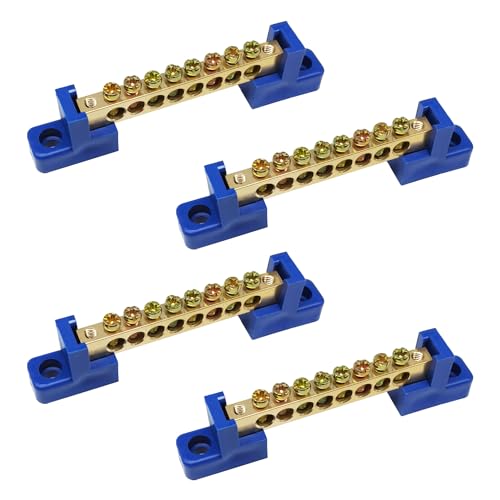
This 8-position grounding bus bar provides convenient organization for multiple grounding conductors. It’s built with a quality insulating base to minimize shorting risks and offers flexible screw choices (M4) to fit various installation needs. The package includes a durable construction suitable for long-term panel use, with straightforward mounting that reduces wiring complexity in crowded breaker boxes.
Binwacool Ground Bar Kit

Binwacool offers a 25-terminal ground bar kit designed for 8-space boxes and larger configurations. The aluminum bus and galvanized steel frame provide corrosion resistance, while the dense terminal count supports extensive grounding networks. This kit suits higher-density panels or scenarios where multiple branch circuits require independent grounding paths for improved safety and organization.
Mollom IP66 Distribution Box with Bus Bars

The Mollom unit combines a rugged IP66-rated enclosure with integrated bus bars and grounding features. This option is suitable for outdoor or damp environments where moisture resistance is critical. The box supports DIN rail components, enabling flexible arrangement of breakers while maintaining a solid grounding framework. It’s ideal for installations requiring weatherproof protection without sacrificing grounding performance.
Buying Guide: Key Considerations for Ground Bars and Grounding Solutions
- Panel compatibility: Verify that the grounding bar or lug is rated for your specific breaker box model and conductor sizes. Some bars are designed for Leviton or Square D panels, while others are more universal.
- Conductor size and material: Grounding components typically support copper or aluminum conductors. Check the maximum AWG rating and ensure it matches your wiring plan (e.g., 6 AWG to 2/0 AWG for heavy-duty panels).
- Terminal arrangement: A higher number of terminals can simplify organization in complex panels, reduce crowding, and improve inspection accessibility.
- Insulation and base material: An insulating base helps prevent accidental shorts and provides a stable mounting surface. Some bars feature blue insulation for quick neutral/ground distinction in mixed systems.
- Environmental suitability: For outdoor or damp locations, IP-rated enclosures and corrosion-resistant metals extend life and reliability.
- Installation ease: Look for modular designs, clearly labeled terminals, and compatible mounting hardware to speed up upgrades or replacements.
- Code compliance: Ensure the chosen product meets local electrical codes and manufacturer guidelines for your panel class and application.
In summary, the best ground bar choice depends on panel type, conductor size, and environmental conditions. For outdoor or moisture-prone areas, consider IP66-rated options with sturdy grounding paths. For indoor residential panels, compact ground bars with clear labeling and multiple terminals can streamline wiring and future maintenance. Always follow safety practices and consult a licensed electrician when in doubt.