Choosing the right plug or adapter for an electric dryer ensures safety, compatibility, and performance. This guide reviews five high‑quality dryer plugs and adapters designed to convert between old and new outlet configurations, support common amperages, and maintain grounding where applicable. Each option prioritizes reliability and ease of use for American households.
| Product | Brand | Type | Outlets / Receptacles | Key Benefit |
|---|---|---|---|---|
| WELLUCK 3 Prong To 4 Prong Dryer Adapter | WELLUCK | Adapter | 3‑prong plug to 4‑prong receptacle | Simple old-to-new outlet conversion |
| Strightinc 4 Prong To 3 Prong Dryer Plug Adapter | Strightinc | Adapter | 4‑prong female to 3‑prong male | Works with older homes/housing |
| ELEGRP NEMA 14‑30P & 14‑50P Plug | ELEGRP | Heavy‑duty plug | 4‑prong dryer/range plugs | Industrial grade, dual power option |
| ELEGRP NEMA 10‑30P & 10‑50P Angle Plug | ELEGRP | Angle plug | 3‑prong to 4‑prong configurations | Versatile for 30A/50A circuits |
| SURIEEN 5‑15P To 10‑50R Dryer Adapter Cord | SURIEEN | Adapter Cord | 3‑prong to 3‑prong (120V to 220V via adapter) | Helps 120V devices connect to 240V outlets |
WELLUCK 3 to 4 Prong Dryer Adapter

WELLUCK provides a 3‑prong dryer plug that converts to a 4‑prong wall outlet. The design emphasizes a longer, flexible 4‑prong cord and a right‑angle plug for easy access in tight spaces. It is presented as a cost‑ and time‑saving solution for upgrading old equipment without professional installation.
Features include a 3→4 prong conversion, a flexible extension cord, and a molded right‑angle configuration to ease setup. The adapter is described as a practical, economical option for quick compatibility between older three‑wire dryers and modern four‑wire outlets.
Strightinc 4 Prong To 3 Prong Dryer Plug Adapter
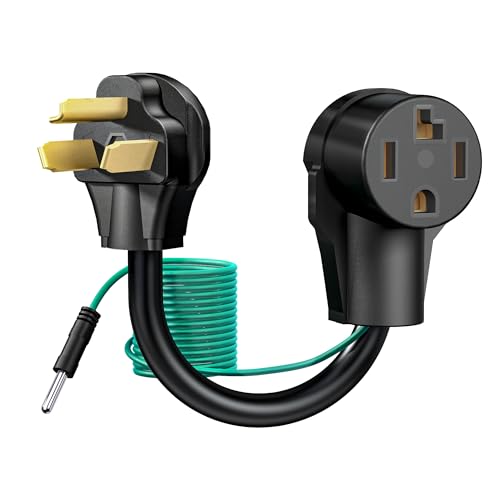
This adapter helps bridge newer dryers with 4‑prong outlets to older homes using 3‑prong receptacles. It’s marketed as simple to install—plug the 3‑prong dryer plug into the wall and connect to the 4‑prong outlet. It’s positioned as a common solution for pre‑1997 outlets in aging homes.
The product notes emphasize compatibility with 3‑wire outlets and a straightforward connection between a new dryer and an older home electrical system.
OAONAN GFCI Replacement Plug Assembly

OAONAN offers a GFCI replacement plug assembly with auto reset and 15A capacity. While not a traditional dryer adapter, it provides safety protection for outlets used by appliances like pressure washers and hair dryers. This option emphasizes rapid disconnection in case of ground faults and ETL‑listed safety.
Key points include surge and lightning protection, easy two‑wire connection, and a fast circuit break if leakage is detected. It is presented for users seeking enhanced protection on compatible circuits.
ELEGRP NEMA 14‑30P & 14‑50P Plug

The ELEGRP plug supports both 14‑30P and 14‑50P configurations, offering a heavy‑duty 4‑prong solution for dryer and range outlets. Constructed with a tough thermoplastic shell and large brass contacts, it aims to deliver reliable conductivity and durability for 30A or 50A circuits. Dual power attachment blades provide versatility in installation and use.
ELEGRP NEMA 10‑30P & 10‑50P Angle Plug

This angle plug provides a 3‑prong to 4‑prong configuration with both 30A and 50A blade options. It is described as extremely heavy‑duty and UL listed, designed for hard use in dryer and range appliance connections. The dual blade setup helps match different outlet types without stocking separate devices.
SURIEEN 5‑15P To 10‑50R Dryer Adapter Cord

SURIEEN presents a compact adapter cord intended to bridge a 3‑prong 120V device to a 50A 220V outlet using a 10‑50R receptacle. It emphasizes ease of use and durability with a heavy‑duty STW jacket. This option is positioned for mixed‑voltage configurations in homes with varied appliance needs.
Buying Guide: Key Purchase Considerations
- Outlet compatibility: Ensure the adapter matches your dryer’s plug configuration (3‑prong vs 4‑prong) and the wall outlet type (NEMA 10‑30/14‑30, etc.).
- Amperage and voltage: Check the dryer’s required amperage (30A vs 50A) and standard US voltage (120V vs 240V) to avoid overloading cords or outlets.
- Safety features: Look for certified components (UL or ETL) and devices with grounding for 4‑prong configurations. GFCI features add protection in humid or damp environments.
- Durability and construction: Heavy‑duty thermoplastic or metal housings, plus robust contacts, contribute to long‑term reliability in laundry rooms.
- Ease of use: Flexible cords, right‑angle plugs, and clear labeling reduce installation friction and accidental disconnections.
- Compatibility with existing wiring: In some homes, retrofitting may require a professional assessment to ensure safe operation and code compliance.
- Warranty and support: Check manufacturer warranties and return policies, especially for safety‑critical electrical components.
When selecting a plug or adapter, prioritize models with verified safety certifications, appropriate amperage, and the correct outlet configuration for your dryer and home. For households upgrading older dryers or outlets, adapters that preserve grounding and provide a straightforward conversion tend to deliver the most reliable results without major electrical work.