Choosing an effective sound barrier for your generator is key to minimizing noise and blocking heat during operation. We’ve reviewed the top options widely available on Amazon, focusing on soundproofing efficiency, heat insulation, ease of installation, and durability. Below is a summary table of the selected products to help you compare essential features at a glance.
| Product | Material Type | Thickness | Coverage Area | Main Feature |
|---|---|---|---|---|
| Siless Liner 157 (4 mm) Closed Cell Foam | Closed Cell Polyethylene Foam | 4 mm | 36 sqft | Waterproof, heat blocker, vibration deadener |
| VOISEN Sound Deadening Material | Closed Cell Foam with Adhesive Backing | 4 mm (157 mil) | 36 sqft | Soundproofing, waterproof, thermal barrier |
| KILMAT Felt Liner 270 mil | Non-Woven Felt | 270 mil | 36 sqft | Heat blocker, sound absorber up to 215°F |
| Audimute Peacemaker Sound Barrier | Soundproofing Membrane | 3 mm | 50 sqft | Soundproof walls, ceilings, and floors |
| Second Skin Luxury Liner – Mass Loaded Vinyl | Mass Loaded Vinyl (MLV) | 1/8 inch (3.175 mm) | 36 sqft (4 sheets) | Heavyweight sound blocking, airborne noise reduction |
Siless Liner 157 (4 mm) Closed Cell Foam Sound Deadening Mat
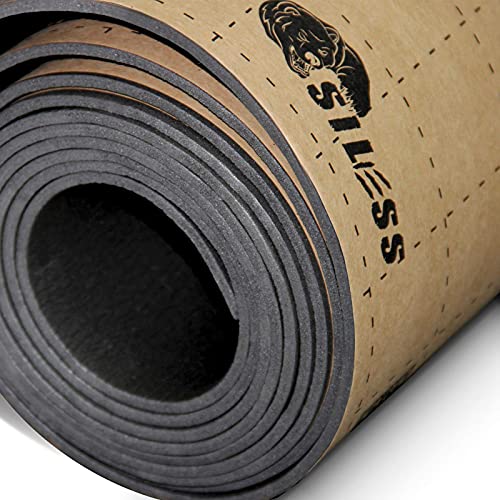
The Siless Liner 157 is a 4 mm thick closed-cell polyethylene foam designed to deliver excellent noise and heat insulation performance. The foam includes a strong adhesive layer ensuring easy installation and long-lasting adherence. It effectively blocks up to 98% of radiant heat transfer, making it ideal for generator heat containment and soundproofing.
Besides its sound deadening qualities, the liner is lightweight, waterproof, and resistant to oil, preventing moisture absorption and odor. Its compressible closed-cell structure provides flexibility for fitting into tight spaces, making it a multi-purpose barrier for both heat insulation and vibration reduction around generators.
VOISEN 4 mm Sound Deadening Mat for Cars and Generators

The VOISEN Sound Deadening Mat offers high-quality, 4 mm thick closed cell foam designed to reduce noise and thermal radiation efficiently. Spread across 36 square feet, it is constructed with a triple-layer design comprising high-density foam, strong adhesive backing, and protective paper that secures durability and easy installation on generators or other noisy equipment.
This material excels at blocking engine and exhaust heat, reducing vibration and providing waterproof soundproofing. Designed for vehicle use, it is suitable for generator enclosures to provide a quieter environment and thermal regulation.
KILMAT Felt Liner 270 mil Heat Insulation Sound Deadener

The KILMAT Felt Liner is a 270 mil (approximately 6.86 mm) thick non-woven felt sound deadening mat designed primarily for automotive use but also excellent for generator noise control. It has an operating temperature up to 215°F, making it effective for blocking engine heat and thermal radiation.
Beyond simply insulating noise, this liner absorbs vibration and is backed with an adhesive layer for straightforward application. Its versatility makes it suitable for generators, protecting your space from unwanted noise while maintaining thermal insulation.
Audimute Peacemaker 3 mm Soundproofing Barrier

The Audimute Peacemaker is a 3 mm thick soundproofing membrane ideal for reducing sound transmission indoors, especially on walls, ceilings, or floors. Covering 50 square feet per roll, it is an excellent lightweight option for controlling noise escaping from generator enclosures.
This sound barrier is made in the USA with quality materials focusing on sound isolation rather than heat insulation. While it does provide sound reduction, it is best paired with other thermal barriers if heat insulation is also required for generator use.
Second Skin Luxury Liner – Mass Loaded Vinyl Noise Barrier

Second Skin Luxury Liner is a heavyweight mass loaded vinyl (MLV) sheet providing superior airborne sound blocking. Each sheet is 1/8 inch thick and weighs 1 lb per square foot, which is effective at blocking airborne noise typical of small generators.
The dense and limp properties make it essential for stopping noise transmission through walls or generator enclosures. It’s pre-cut into convenient 24” x 54” sheets for smaller projects. For best results, full enclosure and airtight installation are required to maximize noise reduction efficiency. This product prioritizes sound blocking and is less focused on heat insulation.
Buying Guide: Choosing the Best Sound Barrier for Your Generator
When selecting a sound barrier for a generator, it’s important to consider several factors to ensure optimal noise reduction and heat management:
- Material Composition: Closed-cell foam and mass loaded vinyl (MLV) are common soundproofing materials. Foam offers good vibration damping and some heat insulation, while MLV excels at blocking airborne sounds due to its density.
- Thickness and Density: Thicker materials generally provide better soundproofing but may be heavier and harder to install. Aim for materials with proven thermal and sound absorption ratings suited to reduce generator noise and heat transfer.
- Heat Resistance: Generators generate substantial heat, so materials rated for high temperatures (up to 215°F or more) are preferable to avoid damage and maintain insulation properties.
- Waterproof and Oil Resistance: Outdoor or garage generators may encounter moisture and oil – waterproof barriers help prevent degradation and maintain performance longevity.
- Ease of Installation: Look for products with strong adhesive backing or flexible material that can be cut and fitted easily around generator parts and enclosures.
- Coverage Area: Measure the space around your generator needing coverage to purchase an adequate quantity, reducing waste and ensuring full enclosure for noise reduction.
- Sound Blocking vs. Absorption: Sound blocking materials (like MLV) prevent noise from escaping the enclosure, while absorption materials reduce echo and vibrations within. A combination may yield the best results.
Carefully balancing these features depending on your generator’s operating environment will maximize comfort by lowering noise levels and controlling heat emission effectively.