Best Speed Controllers for 24V DC Motors: Reliable PWM Regulator Options
Finding a dependable speed controller for a 24V DC motor ensures smooth starts, precise speed control, and protection for your powertrain. The following selections cover a range of current capacities—from compact 3A modules to high-current 30A regulators—so you can match performance to your project, whether it’s a robotics build, a small automation system, or hobbyist experimentation. Each product is designed for DC motors within the 7–70V range, offering features like forward/reverse control, soft start, and detachable potentiometer cables for flexible wiring.
Summary of chosen products:
| Product | Brand | Voltage Range | Max Current | Key Features |
|---|---|---|---|---|
| RioRand Small PWM DC Motor Speed Controller | RioRand | 6–28V | 3A | Forward/Reverse, soft wire, silicone wire |
| SDRGEEK DC Motor Speed Controller | SDRGEEK | 9–60V | 0–20A | Potentiometer speed, brake/clockwise rotation |
| RioRand 7-70V PWM DC Motor Speed Controller | RioRand | 7–70V | 30A | Run/Stop/Brake, detachable pot |
| Enmja PWM Motor Speed Controller | Enmja | 7–70V | 30A | Wide duty range, quiet operation |
| PEMENOL PWM Motor Driver | PEMENOL | 5–24V | 15A | Power-off memory, soft start, external control |
RioRand Small PWM DC Motor Speed Controller

The RioRand unit is designed for low‑voltage gear motors, with an input range of DC 6–28V and a maximum continuous output current of 3A (with a recommended limit not to exceed 3A). It provides forward/reverse switching and a potentiometer with switch functionality, making it suitable for compact, cost‑effective applications where space and weight are at a premium. The controller uses silicone‑insulated wire rated for high temperature, which helps with reliability in enclosed or hot environments. Users should ensure the device is powered from a DC source, as it is not intended for direct connection to mains AC power.
Key considerations for this model include its modest current rating and simple control scheme. It excels in small robotics, hobby projects, and educational kits where a compact 80W maximum power capability suffices. When integrating, plan for separate power and motor grounds, and verify the direction control wiring to achieve the desired rotational behavior. This module benefits from a compact form factor and straightforward operation, making it a dependable starter choice for 24V battery systems and 24V gearmotors that draw modest current.
SDRGEEK DC Motor Speed Controller

This regulator offers a broad voltage window from 9 to 60V and up to 20A of continuous current, delivering up to 1200W of power in DC motor applications. It functions as a PWM speed regulator and supports both clockwise and anticlockwise rotation via potentiometer control. The device is intended for DC brush motors and is not suitable for electric vehicles or brushless motors. A key feature is its ability to vary speed with a knob, while maintaining stable operation under load. It is an attractive option for mid‑to‑large DC motors that require precise speed control without motor speed fluctuations.
When evaluating this controller, check for adequate heat dissipation and cable/wire gauge to match the motor’s current draw. Its versatility for dimming and motor regulation makes it a strong fit for lab benches and workshop projects where steady speed adjustments are essential, as well as small conveyors or actuators that run on 12–48V supplies.
RioRand 7-70V PWM DC Motor Speed Controller

Designed for a wide voltage range, this RioRand model supports 7–70V with a robust 30A current rating. It includes an on‑board run/stop/brake switch and a detachable potentiometer cable for flexible mounting. The design emphasizes a wide duty cycle range and smooth motor operation with minimal vibration and noise, making it suitable for longer running periods in applications like automation test rigs or robotics where a constant, controlled speed is necessary. A caution is noted: it is intended for DC brushed motors and requires a dedicated DC power supply separate from AC mains power.
Consider this option when your project requires higher current than typical hobby controllers, especially if you need a reliable brake function and straightforward wiring. Ensure your power supply can comfortably handle 30A and that all wiring is rated for the anticipated current to maintain performance and safety over extended use.
Enmja PWM Motor Speed Controller

The Enmja controller supports a wide input range of 7–70V with a maximum continuous current of 30A, positioning it as a strong option for more demanding DC motors. It features a broad duty cycle adjustment, a low‑noise, low‑vibration performance profile, and a separate, detachable cable for the potentiometer. The device includes a power indicator and a robust circuit design intended for long‑term operation. It is well suited for projects requiring precise speed control, braking functionality, and reliable startup behavior across a variety of DC motor sizes.
When integrating this unit, factor in proper heatsinking and enclosure space, since higher current levels can generate heat. The detachable pot cable simplifies installation in tight spaces, and the broad voltage window helps accommodate motor choices without needing multiple controllers. This makes Enmja a versatile option for workshops and hobbyists who run 12–48V motors at varying loads.
PEMENOL PWM Motor Driver
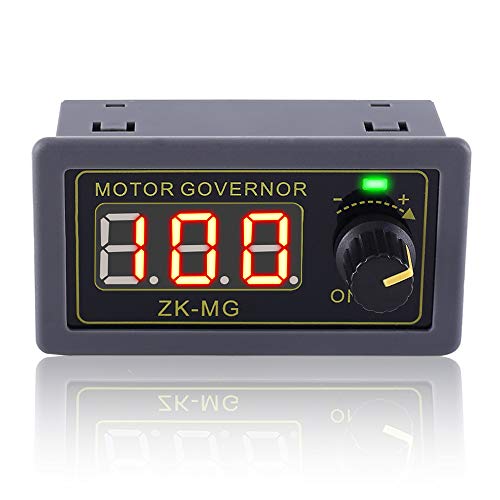
The PEMENOL motor driver operates from 5V to 24V with a maximum current of 15A and up to 150W, making it suitable for small to medium DC motors. It includes a power‑off memory function so last settings persist after a power cycle, improving workflow efficiency. A start/stop button and an external control option provide practical command flexibility, while a soft-start feature reduces inrush current, protecting both motor windings and drivers from mechanical stress. The product emphasizes proper polarity during wiring to avoid short circuits, and the inclusion of a detachable control cable adds installation versatility.
PEMENOL’s compact, feature‑rich design makes it a good choice for compact robotics, automated fans, and small linear actuators running at 12–24V. It balances ease of use with protective features like soft start and memory, which can be beneficial in teaching environments or prototyping where repeatability matters across tests.
Buying Guide: Key Purchase Considerations
- Voltage and current requirements: Match the controller’s voltage range and continuous current rating to your motor. Running a motor far above its rating risks overheating and damage.
- Control features: Decide if you need forward/reverse, brake, soft start, or a detachable potentiometer. Some models include wake/sleep or memory functions for easier automation workflows.
- Wiring and connectors: Consider wire gauge, connector types, and the length of control cables. Detachable pot cables offer flexible mounting but require careful routing to avoid interference.
- Heat management: Higher current models (20–30A) generate more heat. Plan for adequate heatsinking and venting in enclosures used in real environments.
- Power supply separation: Many controllers require a dedicated DC power source separate from any AC mains supply. Ensure compliance with safety standards for your setup.
- Motor compatibility: Controllers are designed for brushed DC motors. Brushless motors require different driver technologies and wiring schemes.
- Durability and environment: If the application involves vibration, dust, or moisture, choose enclosures and components rated for those conditions to improve longevity.
- Installation footprint: Compact modules fit tighter spaces, but high‑current units demand more room for cooling and cable management.
- Safety: Use fusing, proper insulation, and protective coverings to prevent electrical hazards during operation and maintenance.
When selecting a model, benchmark against your most demanding scenario—highest current draw, worst case startup surge, and endurance requirements—to ensure the controller you choose remains reliable throughout its intended life cycle. The 5 options above span a spectrum of voltages and currents, offering a mix of simplicity and advanced features to cover common 24V DC motor projects while keeping compatibility with a broad range of equipment and learning environments.