Best Stickers for Electrical Panels to Streamline Wiring Labels
Choosing the right stickers for electrical panels helps organize circuits, speeds up maintenance, and improves safety. This guide highlights five top options, covering durability, readability, and versatile sizing for home or commercial panels. Each product is backed by reusable, weather-resistant materials designed to withstand indoor and outdoor environments. Read on to compare features and find the best fit for your breaker box labeling needs.
| Product | Brand | Key Benefit |
|---|---|---|
| Premium Quality Non-Tearable Vinyl Paper Circuit Breaker Directory Label | Penguin Planner | Rewritable, tear-resistant, dual-direction readability |
| STARLIBOO 16 Sheets Breaker Panel Labels | STARLIBOO | Large catalog and number set, durable, water resistant |
| 2 PCS High Voltage Sticker, 4×2 in | LONGMUU | Clear warning labels, UV and water resistant |
| 14 Sheets Breaker Panel Labels, Colorful | TRYXN | Comprehensive set with multiple label types |
| 16 Sheets Breaker Panel Labels Electrical Box Sticker Numbers | KIUKIUO | Reusable, tear-resistant, mix colors option |
Premium Quality Non-Tearable Vinyl Panel Labels

The Penguin Planner circuit breaker directory labels are made from writable vinyl designed to resist sweat, water, and oil. This set is suitable for indoor and outdoor use, offering durability that minimizes fading or tearing. An emphasis on readability from both directions means labels can be oriented for the panel’s actual installation, including sideways printing for easy identification from any side. Each entry includes round stickers to accompany fuses, helping you quickly identify the correct fuse when needed. The system supports up to 48 entries, making it a strong option for larger panels in residential or commercial settings.
Users can write directly on the reusable vinyl, enabling long-term updates as electrical configurations change. The flexible materials balance ease of application with resilience, reducing downtime during maintenance. The set is particularly useful where fuses must be identified quickly, and its reusable nature provides a cost-effective labeling solution over time. For upgrades or relocations, the labels can be removed and reapplied without significant wear, a helpful feature in dynamic electrical installations.
STARLIBOO Breaker Panel Labels And Sticker Set

STARLIBOO offers a comprehensive labeling package designed to organize breakers effectively. The kit includes 16 sheets with up to 42 catalog entries per sheet, along with 126 numbered stickers and 3 note labels. This quantity ensures that large panels can be clearly labeled with minimal repetition. The labels are described as durable and waterproof, suitable for environments where panel doors see frequent handling. The set claims tear-splitting convenience, allowing partial removal or replacement of individual labels without affecting the rest of the catalog.
With these stickers, you can create a readable directory that helps technicians locate circuits rapidly. The diverse sizes—large directory stickers and smaller numbered stickers—support both door labeling and fuse-by-fuse identification. While the product focuses on utility and clarity, users should verify panel door dimensions to ensure proper fit. The set is appropriate for commercial spaces or complex residential installations where a robust labeling system is essential.
2 Pcs High Voltage Warning Stickers
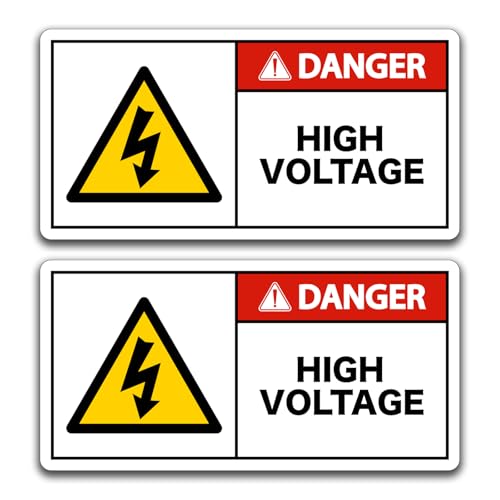
LONGMUU’s 4×2 inch high voltage stickers are designed to warn and inform. They come in red, black, and white with waterproof, UV-resistant properties that help ensure legibility and longevity in varied environments. The labels are easy to apply—peel and stick—making installation straightforward for one person. The material is described as tough against bending and weather exposure, appropriate for both indoor electrical panels and outdoor equipment enclosures. This set provides essential hazard identification to enhance safety procedures around electrical installations.
The barcode-like simplicity of the design supports quick recognition and reduces the likelihood of mislabeling during routine maintenance. Because the package contains two stickers, it’s suitable for smaller panels or as spare warnings for future updates. Users should consider whether a broader color-coded system is needed for different voltages or panel sections. The product’s emphasis on durability and clear contrast makes it a practical complement to more extensive labeling kits.
TRYXN 14 Sheets Breaker Panel Labels

TRYXN provides a color-rich labeling bundle designed to streamline energy panel organization. The set includes 10 breaker directory labels, 4 number labels, and annotation tags, enabling a comprehensive labeling solution. With large directory labels (11″ x 6.1″) and compact circular labels (0.4″ diameter), the kit balances visibility with space constraints. The material is described as fade-resistant, maintaining legibility across temperature changes and humidity variations, which is advantageous in unconditioned spaces or garages. The array of label types supports both circuit mapping and quick fuse identification.
These labels are designed for practical use—easy to apply and readable—while offering a reasonable quantity for multiple projects or evolving electrical systems. The include-notes also help technicians document changes or specific details about circuits. Users should assess whether the color palette and sizing align with existing panel aesthetics and whether the larger directory labels fit the panel door. TRYXN targets a balanced approach between quantity, readability, and durability.
KIUKIUO Breaker Panel Labels With Numbers

KIUKIUO offers 16 sheets of breaker panel labels with numbered catalog entries and a mix of colors for easy identification. The set includes 42 entries per catalog sheet and 126 numbers per number sticker, along with three note labels, providing substantial labeling capacity. The labels are described as reusable and tear-resistant, suitable for repetitive use in busy electrical environments. The ability to cut or adapt label sizes helps fit various panel door dimensions, making this option versatile for different panel brands and layouts.
The product emphasizes quick circuit identification, with clearly printed numbers on each fuse to minimize search time during maintenance. It’s designed to be preserved through temperature fluctuations and humidity, maintaining legibility over time. As with any labeling system, users should ensure the color scheme aligns with their safety protocols and whether their panel enclosure supports the provided sizes. KIUKIUO aims to deliver robust, reusable labeling with flexible quantity for large or growing installations.
Buying Guide: Key Purchase Considerations
Check panel size and door clearance before choosing labels. Ensure the largest label will fit without obstructing latches or handles. Consider color coding to differentiate circuits by voltage, phase, or equipment type, and decide whether a full directory plus catalog system or a compact set will meet your needs.
Durability matters: look for waterproof, UV-resistant materials and tear-resistant or reusable labels for long-term use in varied environments. Writable surfaces can be beneficial for updating circuits, but verify compatibility with your preferred writing instrument (ballpoint, permanent marker). For busy maintenance crews, a larger catalog or higher quantity of labels reduces the need for frequent reorders.
Readability is crucial: choose labels with high contrast, legible fonts, and enough size to be seen from a reasonable distance. Directional readability (labels legible from multiple angles) helps in panels installed in unconventional orientations. If you frequently reconfigure panels, consider reusable vinyl labels that peel off cleanly without leaving adhesive residue.
Installation and maintenance should be simple: self-adhesive backing that sticks to metal without extra tools is ideal. Some sets include circular fuse labels to map each fuse quickly, which can reduce troubleshooting time. Finally, align your purchase with the scale of your electrical system—home panels may need fewer entries, while commercial panels demand extensive catalogs and additional note labels for reporting and compliance.