Timers switches help automate lighting, boost security, and save energy. This article highlights five top picks for American homes, explaining how each model supports daily schedules, sunrise/sunset adjustments, and vacation modes. Compare features, installation needs, and reliability to decide which timer switch fits your lifestyle and wiring setup.
| Product | Brand | Key Features |
|---|---|---|
| GE SunSmart Digital In-Wall Timer | GE | Daily ON/OFF, sunset/sunrise presets, vacation security, neutral-wire compatible |
| BN-LINK 7 Day Programmable Timer (Backlight) | BN-LINK | Blue backlight, 18 ON/OFF programs, 7-day scheduling, random security mode |
| BN-LINK 7 Day Astronomical Timer (Sunrise/Sunset) | BN-LINK | Astronomical clock, 18 ON/OFF programs, supports DST and random mode |
| Leviton Decora Programmable and Astronomical Timer | Leviton | Astronomical clock, multiple schedules, 49 ON/OFF events, neutral wire |
| DEWENWILS 7-Day In-Wall Timer | DEWENWILS | 7 ON/OFF programs, DST/RDM mode, backup battery, neutral wire required |
GE SunSmart Digital In-Wall Timer
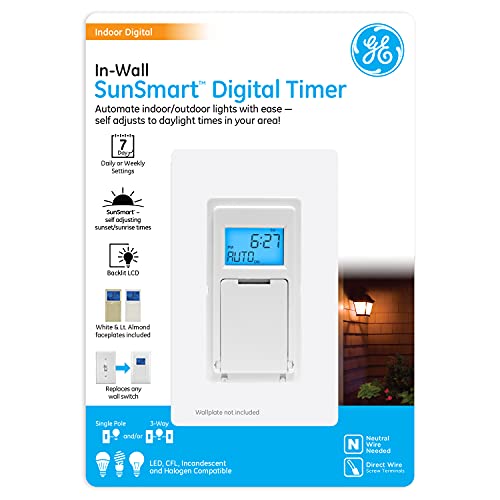
GE’s SunSmart model uses built-in daylight adjustments to follow seasonal changes in sunrise and sunset. It supports weekly programming with up to seven ON/OFF programs and offers a random security feature to imitate occupancy. The switch is compatible with single-pole or three-way setups that have a neutral wire and controls various fixtures including LEDs, CFLs, incandescent, and halogen bulbs. This timer is designed for fans and heaters as well, making it a versatile choice for living rooms, patios, and bedrooms.
BN-LINK 7 Day Programmable Timer With Backlight

This BN-LINK timer includes a blue backlight for easy visibility and up to 18 on/off programs across a 7-day grid. It supports both single-pole and 3-way configurations and automatically handles Daylight Saving Time. A built-in backup battery preserves settings during outages, and a random vacation mode helps create an occupied look when you’re away, enhancing home security while reducing energy use.
BN-LINK 7 Day Astronomical Timer

The astronomical BN-LINK timer automatically adjusts lighting for sunrise and sunset, with six preset time zones and 7-day programming. It supports up to 18 ON/OFF events and allows options for manual time adjustments. Features include DST and a random mode to make your lighting appear occupied, which can contribute to home security while saving energy.
Leviton Decora Programmable Astronomical Timer
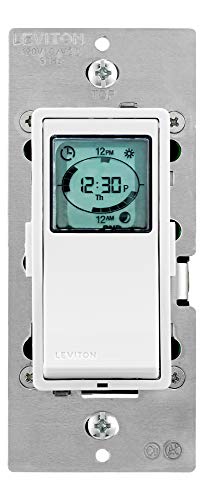
Leviton’s VPT24-1PZ combines programmable and astronomical timing with a flexible schedule grid, allowing up to 49 ON/OFF events. It supports single-pole or 3-way installations and requires a neutral wire. The built-in astronomical clock automatically adjusts for sunrise and sunset based on location, while a daylight-saving feature keeps timing accurate through seasonal changes. This model emphasizes reliability and expanded scheduling for multi-room homes or home offices.
DEWENWILS Indoor In-Wall Timer
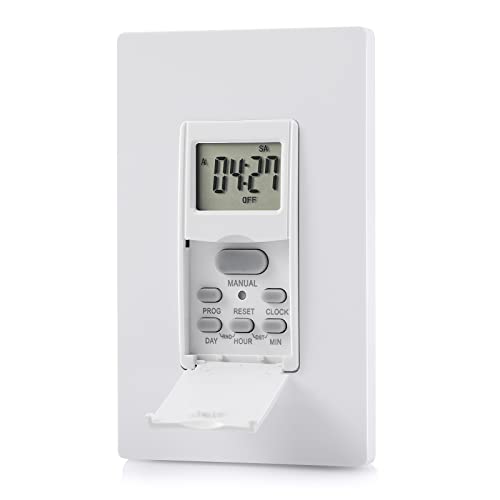
DEWENWILS offers a 7-day timer with seven ON/OFF programs per day and a one-minute interval, making it versatile for turning lights, fans, or motors on a precise schedule. It includes DST and random modes, plus a backup battery to retain programming during outages. A neutral wire is required for installation, and the unit is designed for straightforward wiring and reliable daily use in both living spaces and utility rooms.
Buying Guide: Key Purchase Considerations
- Wired vs. wireless: In-wall timers require wiring and a neutral conductor for most advanced models. Check your box wiring and compatibility before purchasing.
- Astronomical vs. fixed schedules: Astronomical timers automatically adjust for sunrise and sunset, reducing manual changes. Fixed timers offer precise times you control manually.
- Programming capacity: Consider the number of ON/OFF events and days you need. Some models offer 7-day programming with up to 49 or 18 events per week.
- Backups and reliability: Look for backup batteries or memory retention to keep settings during outages. This prevents returned-to-default schedules after power loss.
- Security features: Random or “vacation” modes simulate occupancy, deterring intruders while saving energy.
- User interface and visibility: A blue backlight or well-labeled buttons aids setup, especially in dim areas like garages or basements.
- Compatibility: Ensure the timer supports your fixtures (LED, CFL, incandescent) and whether it works in single-pole or 3-way setups.
- Energy savings: Timers reduce unnecessary lighting, especially when used with daylight-sensitive or outdoor lighting, contributing to ongoing household savings.
- Installation requirements: Neutral-wire requirement, mounting compatibility, and size should fit your switch box and wall space.
- Durability and certifications: UL-listed or ETL-listed products offer assurance of safety and quality for indoor use.
Choosing the right timer switch involves weighing automation needs, wiring compatibility, and security goals. For homes seeking seasonal lighting alignment, astronomical timers offer convenience. For those prioritizing simple daily schedules and clear visibility, a backlit digital timer provides straightforward setup. Energy and security benefits often arise from random occupancy modes and DST handling, making these devices a practical addition to modern American homes.